English translation of the prose
AI-assisted English translation of the prose; quoted poems remain in Japanese. The Japanese original remains authoritative.
Originally published: 30 July 2020. Essay dated 19 July 2020.
Pandemics in Shakespeare’s time
福田京一
This translation retains the article’s historical assertions, dates, and cited wording, including apparent inconsistencies; it is not a corrected historical or medical edition. The Japanese translations of poems remain unchanged, alongside the English verses already present in the original.
As of 18 July 2020, news reports say that worldwide novel-coronavirus cases have reached about fourteen million and deaths 600,000. Infectious-disease specialists warn that even regions where infection seems to have subsided will inevitably face second and third waves. The spread to this scale throughout the world in only six months since the first reported infections in China may rightly be called a historical event comparable to plague. Experts in many fields are already presenting media opinions on the new phenomena it has produced. Some impatient voices speak of a “post-coronavirus” world or way of life. There are views worth listening to, but how can we speak of “post” when it has not ended? I would like to pause and consider this phenomenon within an essential framework: disease as a question of life and death. Taking representations of death and life in sixteenth- and seventeenth-century English literature, when plague was widespread, as a starting point, I will consider how we live in a pandemic age.
1. The devastation of plague and the Elizabethan poets
From antiquity through the Middle Ages, until modernity began scientifically investigating disease’s causes, plague was seen as a calamity, evil, and divine punishment attacking the community. How did people act and think when caught in the shadow of death from an epidemic for which no effective response existed? The works poets left concerning plague, which tormented humanity for centuries, teach us something important.
The ancient Roman poet Horace’s famous line 今は飲む時だ、今は気ままに踊る時だ expresses the motto carpe diem, seize the day. In meaning, it is the other side of “I [Death] am also in Arcadia” (Figure 1), or memento mori, remember death. Whether the disease is plague, tuberculosis, heart disease, AIDS, or coronavirus infection, the situation is the same so long as no effective treatment is found. Incurable illnesses differ by era, but if disease is understood as a metaphor for death that makes us consider life’s meaning, it cannot be separated from life. Here lies the fundamental relationship between death and life.
Medieval Europe incorporated life’s transience before the terror of death into Christian doctrine, organized faith in an absolute being, and built a firmly established society. One force undermining its foundation was the epidemic called the Black Death, or plague, which recurred from the fourteenth century in the later Middle Ages. The first great fourteenth-century outbreak is said to have killed an estimated seventy million people (Murakami, p. 132). Plague bacteria originating in Central Asia reportedly spread throughout Europe through expanding trade, transport, and invasion.
In The Autumn of the Middle Ages, Huizinga describes the thought of death weighing heavily on people’s minds, with “remember death” echoing constantly through every aspect of life. Three melodies ran through the later Middle Ages: lament for vanished glory; trembling horror at the decay of beautiful things; and terror at one’s destiny to be carried off by death unawares. The first was only a mild sadness compared with the other two. A beautiful woman’s corpse rotting and giving off a stench called into question the very existence of beauty, rather than merely recalling its transience. Images of the danse macabre, the dance of death, repeated in woodcuts, paintings, and drama (Figure 2), embodied death and made viewers shudder at their own inescapable fate. According to Huizinga, these images drove late-medieval thought toward two extremes: lamenting the fleeting nature of power, fame, pleasure, and beauty, or believing in the soul’s salvation beyond this world and sharing its blessed joy. Thoughts and feelings between the two were ignored, and “the living movement of the heart is turned to stone.”
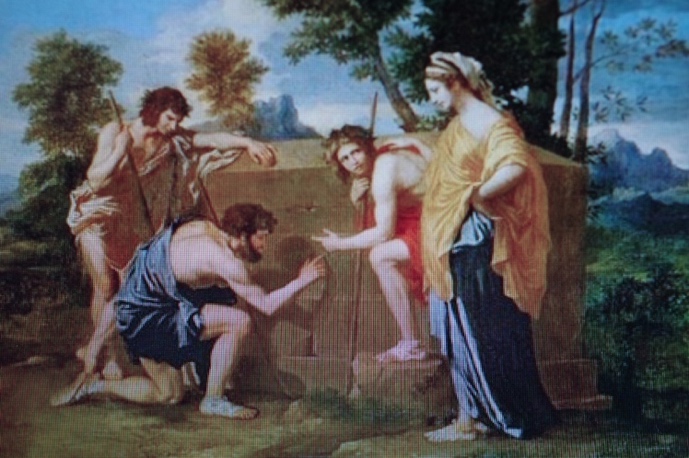
Figure 1. N. Poussin, The Arcadian Shepherds, 1637.
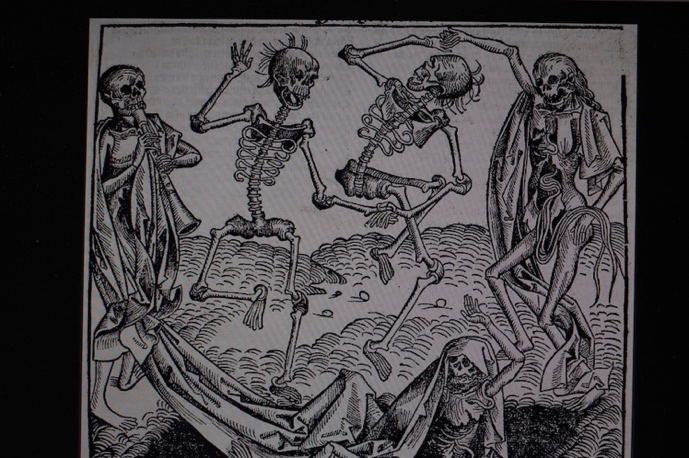
Figure 2. M. Wolgemut, Dance of Death, 1493.
How, then, did that petrified heart return to life in the Renaissance? Let us consider the theme of death. In England alone, the Black Death (Figure 3) broke out severely in 1360–63, 1471, 1479–80, 1603–11, and 1665–66. Without precise records, these too are estimates, but deaths are said to have totaled approximately 150,000–180,000, based on the list in Wikipedia’s “Plague” entry cited by the author. Other estimates from records of the time give 660,000 deaths between 1570 and 1670. Plague also occurred frequently outside these major outbreaks. Between 1592 and 1594, for example, it spread through many parts of England and reportedly killed 15,000 in London. Everyday life stood side by side with the Black Death. Naturally, poets linked love with death.
In The Faerie Queene (1590–96), leading Elizabethan poet Edmund Spenser responds to swiftly passing time’s cruelty by urging lovers to live for love, even in a transient life:
So passeth, in the passing of a day,
Of motall life the leafe, the bud, the flower;
Ne more doth florish after first decay,
That earst was sought to deck both bed and bowre
Of many a lady, and many a paramowre!
Gather therefore the rose, whilst yet is prime,
For soon comes age, that will her pride deflower;
Gather the rose of Love, whilst yet is time,
Whilst loving thou mayst loved be with equal crime.
Book 2, canto 12, sanza 75.
一日が過ぎていくうちに 過ぎていくのです
人の命の葉も 蕾も 花も
一度枯れれば咲くこともない
かつては求められてベッドと寝室を飾ったのに
多くの婦人の、そして多くの愛人の
だから 薔薇を摘みとりなさい 盛りのうちに
すぐに花の誇りを奪いとる老年がやってくるのだから
愛の薔薇を摘みとりなさい まだ時があるうちに
お前が愛するとき 同じ罪で愛されるのだ
Spenser acknowledges that human love, eros rather than divine agape, makes both loving and being loved merely sins of the human world. Yet he does not condemn living in love’s joy. The Renaissance ideal was a harmonious world in which the three Graces of beauty, love, and virtue held hands (Figure 4). Even within this ideal Arcadia, death’s shadow lurked. When death appeared before people as disaster, war, epidemic, and other forms, harmony wavered. Love began asserting itself more strongly against beauty that vanished and virtue, or chastity, that restrained joy.
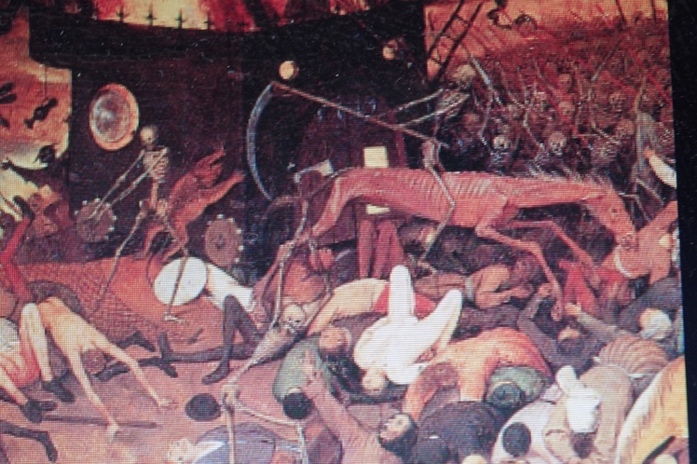
Figure 3. P. Bruegel, The Triumph of Death, detail, 1562 (?).
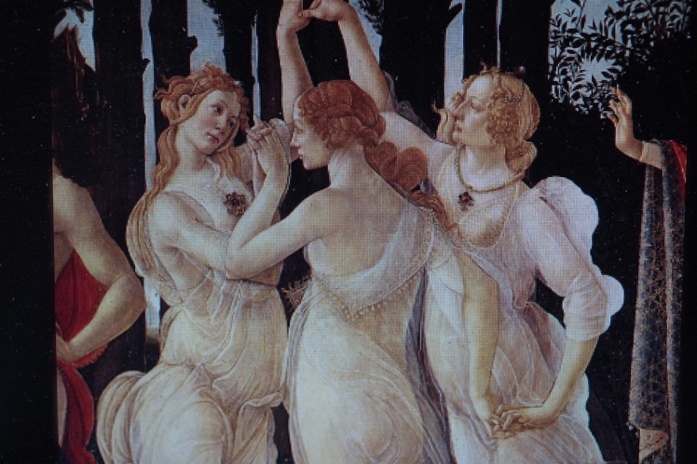
Figure 4. S. Botticelli, Primavera, detail, 1482 (?).
Another major poet of the age, Philip Sidney, left Oxford in 1572, aged seventeen, when it closed because of plague. He then briefly moved to Cambridge, where he apparently met Spenser. In the 1580s he wrote the autobiographical Astrophil and Stella. Following the courtly-love tradition of Astrophil’s Platonic love for the married Stella, he praised spiritual love, virtue, and beauty, yet also recognized his own irrepressible erotic desire:
So while thy beauty draws thy heart to love,
As fast thy virtue bends that love to good:
But “Ah,” Desire still cries, “Give me some food!” (Sonnet 71)
だから 貴女の美しさが心を愛へと引き寄せるとき
すぐさま貴女の徳がその愛を善行に向かわせる
だが、嗚呼 それでも欲望は叫ぶ 「もっと食べものをくれ」と
Earlier, Giovanni Boccaccio wrote The Decameron (1353), mainly humorous erotic tales told by ten men and women sheltering in a villa outside Florence from raging plague. Speaking directly of sexual desire mingled with laughter and sadness, they shared life’s joys against an unforgettable fear of death. With Death watching, one might say, they honestly expressed how they wished life could be. Elizabethan poets and dramatists similarly created new works by confronting life beside death and devising new expression, rather than repeating religious conventions concerning love, virtue, and beauty. Sidney, well-born, educated, gifted, moderate in religion, and established at court, made Desire cry もっと食べものをくれ. This cannot be understood simply as his individual voice: it is the voice of an age.
In 1592 Thomas Nashe published the satirical pamphlet Pierce Penniless, Christopher Marlowe staged Doctor Faustus, and Shakespeare staged The Comedy of Errors. London’s theaters closed later that year. In Nashe’s allegorical comedy Summer’s Last Will and Testament, performed before then, the following was sung, later published as “A Litany in Time of Plague” (1600):
Beauty is but a flower
Which wrinkles will devour ;
Brightness falls from the air,
Queens have died young and faire,
Dust hath closed Helen’s eye,
I am sick, I must die.
Lord, have mercy on us!
美は一輪の花
やがて皺が食い尽くすだろう
明るさは大気から消えて
女王たちも若く美しいまま死に
塵がヘレナの瞳も閉ざした
わたしは患い 死なねばならぬ
主よ われらを憐み給え
Based on pastoral poetry fashionable in Renaissance Europe, it links the transience of nature and human life with a wish for divine salvation. Against London’s plague, that wish was urgent. Amid Elizabethan tensions among Catholicism, Puritanism, and atheism intertwined with politics, Nashe defended the queen’s authority, social order, and the Church of England. Yet the queen’s beauty and life would not last, and the biblical teaching that dust returns to dust remained unchanged. From 1568, London houses containing plague patients were closed with notices on their doors reading “Lord, have mercy on us.” In this respect, Nashe shared the widespread belief that the seven deadly sins had provoked God’s anger and brought plague.
2. Three playwrights and plague
Marlowe, who staged The Tragical History of Doctor Faustus in 1592, held progressive views and was once briefly arrested by the authorities on suspicion of atheism. At the play’s beginning, Faustus asks himself: “Have not many towns escaped plague through your medicine, and have you not controlled illnesses that kill thousands? Yet I remain only Faustus, a mere human being. Have you given people eternal life or restored the dead? If so, this work would deserve respect. Farewell, medicine.” His learning reaches an impasse; unable to believe in a church claiming miraculous cures, he learns magic from the devil. He contracts to surrender his soul in exchange for twenty-four years of living as he pleases with Mephistophilis in attendance.
Through magic he is led into the world of the seven sins, where he experiences pleasure, power, and false faith. Eventually he realizes his choice was wrong. But it is too late to seek salvation, and the promised twenty-four years expire. Animals without souls simply return to earth at death, but he says: “My soul must live on in hell, afflicted by plague. Curse the parents who bore me. No, Faustus, curse yourself and the devil who took heaven’s joy from you.” He falls into hell. Finally the chorus sings that he did more than heavenly power permits.
Marlowe created the play in righteous anger at clergy who blamed London’s slum poor for catching plague through insufficient faith, although they had already endured fifteen years of depression, bad harvests, war with Spain, and higher taxes before the great outbreak of 1603. The drama reveals both the ideal and the limits of Renaissance humanism’s human-centered world. It criticizes an emptied-out Christian church while despairing of medicine’s impotence before life’s miserable realities. Modernity is the history of pursuing human happiness in this world by gradually entering God’s domain through the learning Faustus abandoned: science and rational thought. Marlowe, the Renaissance outsider, stands at the beginning of a modernity wandering between faith and learning.
Shakespeare’s life too was constantly exposed to plague. In 1564, the year he was born, more than two hundred people died in Stratford. The church record on his baptism day contains hic incepit pestis, “here began the plague,” according to the source. His Globe theater in London also closed repeatedly for fear of infection spreading. Apparently he concentrated on writing poetry when performances were impossible. Plague spread in many parts of England between 1592 and 1594. Shakespeare and the poets and dramatists Sidney, Nashe, and Marlowe witnessed London houses being shut, with patients confined inside to prevent further infection.
Romeo and Juliet (1595) ends in the lovers’ tragedy, whose immediate cause was plague. Friar Laurence devises a plan to unite them and sends Friar John to deliver a letter explaining it to Romeo in Mantua. But the friar John chooses as companion has just visited a sick person. Unfortunately, quarantine officers suspect that the two have been in a house containing someone with the dreadful infection, seal the door, and forbid them to leave, delaying the journey to Mantua (Act 5, Scene 2; Yoshio Nakano’s Japanese translation quoted in the original). Consequently, Romeo believes the temporarily sleeping Juliet is truly dead, and the play moves straight toward his grief-stricken suicide.
Perhaps plague is mentioned relatively little in Shakespeare because theater’s purpose was to let audiences enjoy a moment of fleeting life, rather than deliberately remind them of gruesome daily conditions. Passing references do not mean that death was ignored. Rather, fear of dying from infection was reversed into an emphasis on life’s joy, much as when Boccaccio wrote The Decameron amid Florence’s Black Death.
At the beginning of Love’s Labour’s Lost (c. 1596), for example, the King of Navarre does not lament transient life or short-lived beauty. Resisting human passion and worldly desire, he describes an ideal of making his court an academy devoted to immortal learning, opposing Time’s all-reaping scythe. To dedicate themselves to study, he and three noblemen swear to avoid women for three years. Yet immediately upon meeting the beautiful French princess and three ladies, they fall in love and break their vow. Berowne excuses his breach to Rosaline by comparing lovesickness to plague. Like himself, he says, the other three should be marked “Lord have mercy”: they are infected, their hearts diseased, plagued by the ladies’ eyes. Though punished, they are not the only infected ones; the Lord’s tokens, signs of plague, can also be seen on the women (Act 5, Scene 2).
Comparing men, pale and panting from love under beautiful women’s gaze, to fever patients, and the women to infection’s source, was not especially unusual. Yet even while dreadful plague terrified London, for Shakespeare love’s anguish was essentially of the same nature as plague’s suffering.
If neither learning nor religion can cure plague or lovesickness, sanctifying learning and living ascetically against natural feeling are as much “sin” as following desire. The irony that Navarre’s dream of a state modeled on Plato’s academy, which denied art’s value, collapses before his own romantic feelings belongs to Shakespeare and his age. Even if that feeling is plague as a metaphor for divine anger, it remains unavoidable human reality. Holding “a mirror up to nature,” in the wording cited from Hamlet (3.2), to reflect the age as it was: this was Shakespearean drama’s purpose.
In Twelfth Night (1602), when Toby and Andrew request a song, the clown asks whether they want a love song or a song of good life. Toby asks for love, while Andrew says he cares nothing for good life. The clown sings:
O mistress mine, where are you roaming?
Oh, stay and hear, your truelove’s coming,
That can sing both high and low.
Trip no further, pretty sweeting,
Journeys end in love meeting,
Every wise man’s son doth know.
私の恋人よ どこへ行くの
ここに居て聞いておくれ 愛する人がくるよ
高い声でも低い声でも歌えるのだよ
どうか遠くに行かないで 可愛い人よ
旅は愛の出会いで終わるもの
賢い人の子ならみんな知っているよ
What is love? ‘Tis not hereafter,
Present mirth hath present laughter,
What’s to come is still unsure.
In delay there lies no plenty,
Then come kiss me, sweet and twenty,
Youth’s stuff will not endure.
(Act. II, sc. iii)
愛とは何でしょうか 来世にはないよ
今の喜びに今の笑いがあるのだよ
未来などあてにならないよ
遅れたら何も残らないよ
さあここへ来てキスしておくれ 可愛い人
若さは長くは続かないから
At the time, “good life,” Catholic or Protestant, meant preparing in this world to receive God’s grace under doctrines of atonement and salvation. Puritan ascetic, world-denying Calvinism in particular exerted an influence that shook society at its foundations. Against this background, Toby and his companions mock steward Malvolio, who suppresses desire and maintains only an outward appearance of propriety, as a kind of Puritan. In a sense, Puritans too were plague for Shakespeare. Like Plato, who rejected art for distancing people from the Ideas, those who let abstractions and idealism cloud their eyes instead of confronting England’s reality, poisoned by plague, disaster, war, and conspiracy, were themselves plague. In fact, “Puritan” broadly included separatists who, persecuted by the established church, gave up purifying it and sought new lands abroad, and nonseparatists who remained within to reform institutions and worship. Some, as is well known, migrated to the New World to build a New Israel as a place for the good life.
In England, the Catholic Charles I was executed in 1640 and the Puritan Revolution succeeded, as dated and described in the original. The Puritans closed the theaters, regarding drama as a disorderly, poisonous illness diverting attention from life’s truth. Medieval Catholic corruption encouraging idolatry was associated with plague, and theater, reproducing this world’s false life and poisoning audiences, was likewise linked with it. Revolutionary fever disappeared with the Restoration, dated 1760 in the original, but plague remained indestructible.
From the opening of the age of oceanic exploration in the fourteenth century, as the essay dates it, trade expanded the range and frequency of human movement. Prolonged wars—the Thirty Years’, Hundred Years’, and Seven Years’ Wars—increased contact too. Epidemics recurred as movement and contact grew. If modernity extends this medieval world, infectious disease inevitably acquires wider cultural meanings.
People play their allotted roles briefly, then disappear from the stage. Why not enjoy ourselves as long as possible? Life becomes comedy’s stage, full of joy and hope. Yet asking what waits after the dancing ends makes life, as Macbeth confesses, merely an idiot’s tale of sound and fury, signifying nothing. Life is both a comedy wishing for a banquet of joy and hope, and a tragedy evoking suffering and pity in those who see a dance of death there. Moving between these, where did human consciousness seek to go? Considering the later development of these two directions within seventeenth-century views of life and death, one cannot help marveling at how closely the existential anxiety inherited from late-medieval plague by Renaissance people resembles our own in late modernity.
Ben Jonson shared Shakespeare’s cultural circumstances. In 1603 he lost his seven-year-old eldest son to plague. Immediately afterward he wrote the elegy “On My First Son” (1603):
Farewell, thou child of my right hand, and joy;
My sinne was too much hope of thee, lov’d boy,
Seven yeeres thou’wert lent to me, and I thee pay,
Exacted by thy fate, on the just day.
O, could I lose all father, now. For why
Will man lament the state he should envy?
To have so soone scap’d worlds, and fleshes rage,
And, if no other miserie, yet age?
Rest in soft peace, and, ask’d, say here doth lye
Ben. Jonson his best piece of poetrie,
For whose sake, hence-forth, all his vows be such,
As what he loves may never like too much.
さらば わが大事の子、喜びの子
お前に望みをかけ過ぎたのは俺の罪 愛する子よ
七年俺に貸し与えられたお前、いまお前を返すのだ
運命によって取り立てられたのだ 期限が来たので
おお いま父のすべてを失うことができればよいが なぜ
羨むべき状態を嘆き悲しむのか
こんなに早くこの世の煩いと肉体の狂気から逃れたのに
ほかに不幸がないとしても 少なくとも老年からは
安らかに休め もし尋ねられたら答えよ ここに
ベン・ジョンソンの最良の詩が眠っていると
お前のために俺がこれから立てる誓いは
愛することはあっても決して愛しすぎないこと
We cannot read the beloved son’s death, bringing such overwhelming loss, as an occasion that deepened Jonson’s faith. Nor does the gentle resignation and consolation of an ordinary elegy seem to soften his grief. Whatever favorable public reputation his later works enjoyed, his own judgment was that none equaled his “best piece of poetry,” his son. Here there are none of the sermon-like lessons embedded in plays full of satire, irony, humor, loud laughter, and derision: only profound sorrow at death.
Regarding carpe diem, the poem sung by the swindler Volpone while seducing a married woman in Volpone (c. 1606) was later published as “Song: To Celia” (1606). It begins:
Come my Celia, let us prove,
While we may, the sports of love;
Time will not be ours forever:
He, at length, our good sever.
Spend not then his gifts in vain:
Sun that set may rise again;
But if once we lose this light,
‘Tis with us perpetual night.
Why should we defer our joys?
おいでシーリア 楽しもうよ
いまのうちに 恋の遊びを
時はいつまでも居てくれないよ
われらの恩恵もやがて終わらせる
彼の贈り物を無駄にしないように
沈む陽はまた昇るが
ひとたびわれらがその光を失えば
残るのは永遠の闇だけ
楽しみを先に延ばしてどうするのか
Within the play, it can be heard as the sweet talk of a seducer concerned only with satisfying himself, or as a parody of medieval romance’s Platonic love for a married woman. Celia’s husband is neither a noble knight nor an aristocrat, but a vulgar bourgeois obsessed with money. Nevertheless, she preserves her chastity, which is rewarded in the end. Read separately from the play, however, the poem allows another interpretation: a love song courting a young woman who wastes her short life without love, constrained by morality, or an earnest appeal expressed by the phrase 命短し恋せよ乙女. Celia is the object of a man’s desire to enjoy brief love or pleasure before eternal darkness comes, and she may find meaning in his proposed games of love.
The conflict between virtue and love was a source of suffering for the idealized men of medieval chivalric romance. Women, in an age that appears unfree from our perspective, were not allowed to choose love and had virtue imposed on them. Whichever context we use, the poem contains an awareness that if beauty swiftly vanishes, not only the medieval world but also the Renaissance ideal, in which beauty mediated between virtue and love, is collapsing. In the later Renaissance’s transition toward modernity, men unbound by virtue can live for love, or desire, while women still burdened with virtue suffer the conflict. Omnipresent Death’s footsteps intensify awareness of it. A man’s “remember death” thus becomes a message to women to forget virtue and seize the day.
London’s population was about 250,000 around 1600 and reached 400,000 by 1650, making it increasingly Europe’s largest city. As the plague originating in 1603 spread, the Privy Council, the monarch’s advisory body, required 121 parishes to report deaths. When these reached 121 a week, it prohibited gatherings and theater performances. Theaters were thus closed from around July 1608 to January 1610. During this time Jonson wrote The Alchemist (1610), a satirical comedy for their reopening, reflecting London’s society, politics, religion, and theatrical world in detail. After the wealthy fled to the suburbs, he satirized preachers urging the remaining townspeople to repent, fraudulent doctors selling sham medicines, and theater owners and writers making fortunes by selling expensive tickets to shallow plays. At the root of his satire lay fierce ethical anger at the sad and foolish activities of this world, viewed from death’s side.
19 July 2020
References
Bibliographic wording and dates follow the original; English titles already present are retained.
- Reid Barbour, “Thomas Nashe.” Poetry Foundation. Org.
- Ingo Berensmeyer ed. Handbook of English Renaissance Literature. 2019.
- A. C. Hamilton, Sir Philip Sidney: A Study of His Life and Works. 1977.
- Margaret Healy, Fictions of Diseases in Early Modern England. 2001.
- Holly Kelsey, “Pestilence and playwright.” Shakespeare Birthplace Trust, 07 Sep. 2016.
- Ellen Mackay, Persecution, Plague, and Fire. 2011
- Emilien Mohsen, Time and the Calender in Edmund Spencer’s Poetical Works. http:www.publibook.com
- Susan Sontag, Illness as Metaphor. 1977
- Nigel Wheale, “A Constant Register of Public Facts 1589-1662” in Writing and Society. 2005.
- F. P. Wilson, The Plague in Shakespeare’s London. 1924.
- “A Pleasant Comedy Called Summer’s Last Will and Testament.” http: www. oxford-shakespeare.com.
- Jacob C. Burckhardt, 『イタリア・ルネサンスの文化』, The Civilization of the Renaissance in Italy, 1860.
- Johan Huizinga, 『中世の秋』, The Autumn of the Middle Ages, 1919.
- 高階秀爾, 『ルネッサンスの光と闇』, light and shadow of the Renaissance, 1971.
- 村上陽一郎, 『ペスト大流行』, the great plague epidemic, 1983.
Original source images
Select an image to open its source. Text within images remains in its original language.
Original wording, author credits, notes and source materials are preserved there.