Essays · Literature & music
歌謡「赤い靴のタンゴ」に見る女の半生涯An Essay on “Tango of the Red Shoes”
歌謡「赤い靴のタンゴ」に見る女の半生涯An Essay on “Tango of the Red Shoes”
Seishu Hamano / 濱野成秋(女形筆名橘かほり)
原稿PDFを開く(全5ページ)Open the original PDF (5 pages) ↗ 横書きの本文・英語解説へ ↓Continue to the web text & English commentary ↓
Former professor at the State University of New York · Author profile ↗
Seishu Hamano reads a young dancer’s life through “Tango of the Red Shoes,” connecting the song’s imagery with the social setting of early postwar Japan.
西條八十作詩・古賀政男作曲の「赤い靴のタンゴ」。濱野成秋が、歌に描かれた女性の歩みを、戦後日本の世相と重ねて読み解きます。
Japanese original with English commentary, rather than a full translation.日本語本文と英語解説を併記しています。
縦書き・カラーの原稿を読むRead the original manuscript
会長の原稿を、文字色・縦書き・改ページを保ったPDFでご覧いただけます。The author’s original manuscript preserves its vertical layout, colours and pagination.
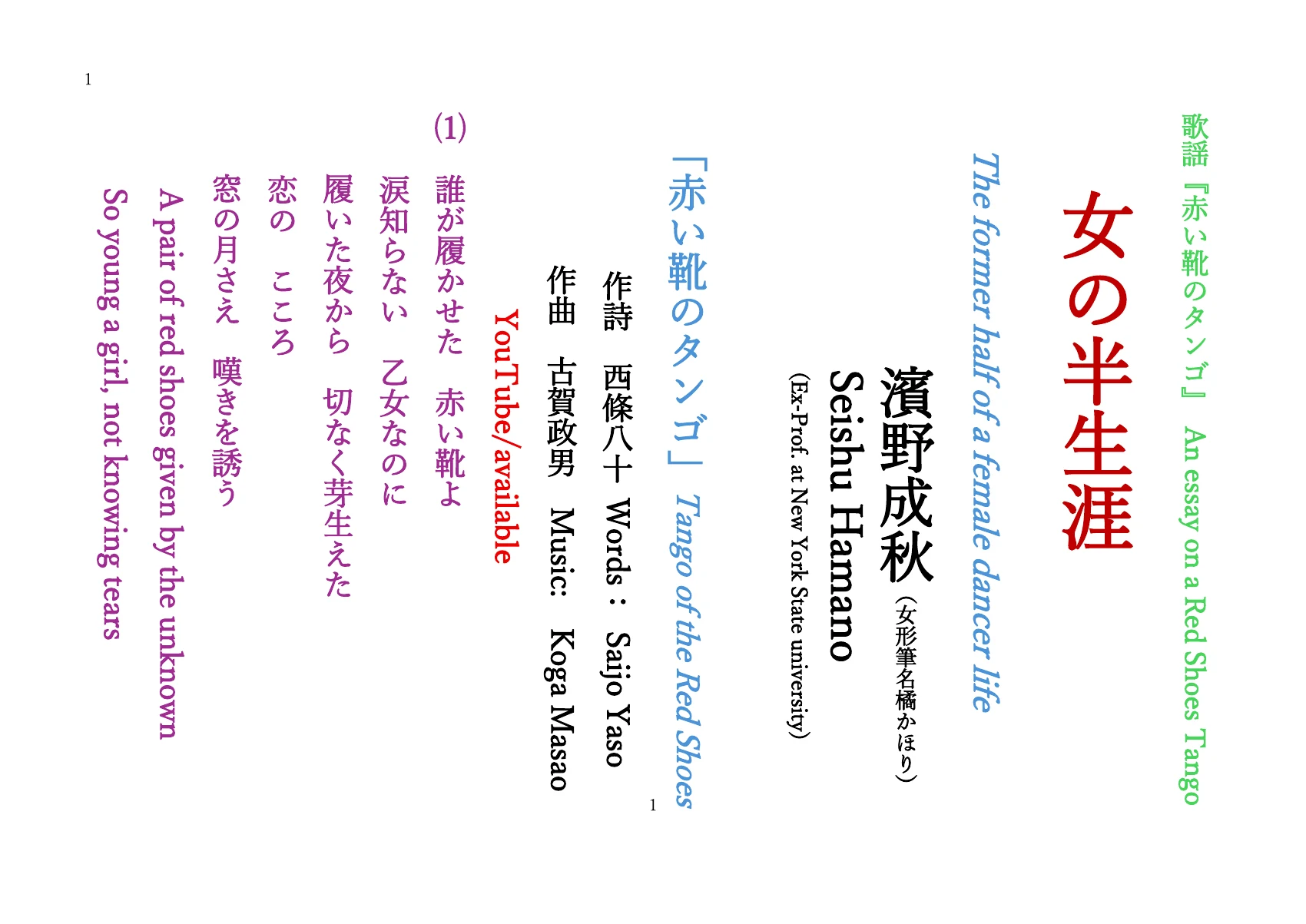
“Tango of the Red Shoes” /「赤い靴のタンゴ」Words: Saijo Yaso (西條八十) · Music: Koga Masao (古賀政男)
Verse 1第1節
日本語本文 · 歌詞引用
誰が履かせた 赤い靴よ
涙知らない 乙女なのに
履いた夜から 切なく芽生えた
恋の こころ
窓の月さえ 嘆きを誘う
この歌が出た昭和25年はようやく食えるか飢え死にか、瀬戸際にピりを打った、朝鮮動乱の特需景気のさ中であった。巷は軍国復活キャバレーが氾濫していた。だから高級すぎるタンゴ調で、悩ましく、おぞましく。ピカピカの赤い靴など、高嶺の花。
歌はまだ男を知らないうぶな少女が、「どうだい、いい靴だろう、履いてみんか?」と悪の誘いにかかる。「何も知らない乙女」を「涙しらない」と書いて胸ときめかす。昭和30年代に出た『赤線地帯』という映画では、赤い靴ならぬ親子丼の旨さに驚嘆した貧農出の子がその道に染まる誘惑の第一歩の描写がある。月を見ても自分の境遇との落差に涙する純真ぶり。進駐軍のダンスホールにぴったりで。
English lyric rendering
A pair of red shoes given by the unknown
So young a girl, not knowing tears
My heart trembles with a Love affair
Feeling grief even when seeing the moon.
Commentary
Five years after the war, Japan was still very poor and naïve. Suddenly, an economic upheaval followed the outbreak of the Korean War. Perhaps an American GI gave her this gift to win her heart—a scene often seen in cabarets. She felt her heart tremble with love and dreams. Beginning with such an encounter, this song depicts a young dancer and invites listeners to wonder: what would happen to her next? Nobody can tell what will happen next.
Verse 2第2節
日本語本文 · 歌詞引用
なぜに燃え立つ 赤い靴よ
君を想うて 踊るタンゴ
旅は果てなく 山越え 野超えて
踊るタンゴ
春はミモザの花も匂う
この赤い靴は持ち主の少女を旅役者のような生活に誘い込んだ。当時やたらと出来たダンスホールにキャバレー。オールナイトでダンサーは客を取る。クリスマス期には郊外電車までオールナイト。赤い靴の乙女も求められるままベースからベースに。軍国キャバレーからキャバレーへ。この奇妙な風景が日本中で見られ、旅芸人の如くダンサーたちも稼ぎまわる。そんな日々の生活では毎日履いた赤い靴はどうなるの?
English lyric rendering
Why do you shine so brightly?
Dancing tango thinking of you
Travelling over hills and pastures
Dancing tango
Mimosa fragrance in Spring.
Commentary
In nineteenth-century America, travelling salesmen were everywhere. In Japan, many actors and actresses travelled in those days. After the war, as this song suggests, many dancing girls travelled too, and one can imagine what might happen to them. The poet Saijo Yaso portrayed their lives with pity, using the dancers’ red shoes as a symbol.
Verse 3第3節
日本語本文 · 歌詞引用
運命かなしい 赤い靴よ
道はふた筋 君は一人
飾り紐さえ 涙で千切れて さらば さらば
遠い汽笛に 散りゆく花よ
靴ほど悲しい宿命を背負った身繕い道具はない。どんなに好かれてもいずれはボロボロになり、棄てられる運命にある……。
この赤い靴も愛された挙句にぼろぼろ。何と、国内にいる恋人を振り捨てて、つまり進駐軍と結婚して船に乗る。憧れのハワイ航路かもしれぬ。ダンサーの仕事にさらば、さらば。赤い靴は出船と共に、捨てられて波の間に間にみえ隠れ…沈んでいく。
作詞者は西条八十。君は早稲田は仏文の教授でアルチュール・ランボーの研究家。だのに、よくもまあ、ここまで女の一生を見事に描けたものだ。こんな、たった十数行の詩の中に、当時の世相も、それに流される女の半生涯も一緒くたに描き込んだ。この才能。八十君はやはり天才というほかない、
English lyric rendering
So sad my life together with you
Having one choice stay or abroad
Strings worn out with tears sayin good bye
Good-bye red shoes on the ocean waves.
Commentary
Professor Saijo Yaso, a prominent scholar of French literature at Waseda University, was able to depict the whole life of a female dancer with remarkable skill.
In this sense, he is an outstanding poet.
Regrettably, however, this song is now among many others slipping into obscurity. A discerning listener may welcome the chance to rediscover it.
Editorial note: English commentary has been lightly edited for clarity. Japanese text and English lyric renderings retain the wording of the supplied manuscript.英文解説のみ表記・文法を中心に整えています。日本語本文と歌詞の英訳は原稿の表現を保持しています。
